

Technical skills can prepare students to perform a job. But knowing how to communicate clearly, solve problems, evaluate evidence, and make sound decisions determines how effectively they can apply that knowledge.
Those foundational skills are sometimes dismissed as requirements to complete on the way to a degree.
How often have you heard – or even said to yourself – “When will I use this in the real world?” Or: “Will this help me get a job?” Or even, “I’ll just Google the answer.” And the list goes on.
Sara Shlaer, dean of the School of Arts, Sciences & Education at the Indianapolis campus and a political science professor, challenges that thinking.
In a rapidly evolving world, where these core competencies are becoming more consequential and artificial intelligence (AI) reshapes how people access and use information, Shlaer argues that these foundational skills extend far beyond the classroom. These skills, she says, shape how people collaborate at work, navigate misinformation, engage with emerging technology, and make decisions that affect not only themselves but their communities.
In the Q&A below, Shlaer explains why communication, critical thinking, ethical reasoning and curiosity are not separate from career preparation – they are essential to it and our increasingly complex world.
This interview has been edited and condensed for clarity and length.
As you think about the start of the 2026-27 academic year, what are you most excited about right now in the School of Arts, Sciences & Education (SASE)?
There are a few things I’m excited about. Over the summer, our leadership team discussed several topics that I’ve asked department chairs to take back to their teams and consider how they might incorporate throughout the year in manageable ways.
One is how we can encourage students to read more deeply and think critically about what they’re reading. The English department, in particular, has faculty who have found effective ways to help students engage with difficult texts, analyze material in new ways and learn to communicate their own ideas.
We’re also exploring alternative grading techniques. Some faculty are looking at ways to assess students’ skills more effectively and encourage deeper engagement with their coursework—not simply to raise grades, but to help students focus on the skills we want them to gain from their courses.
The third area is civic character in the classroom. Last year, I participated in a cohort through Community-Engaged Alliance, and several faculty members joined me this summer for a workshop on Third Way Civics. This pedagogy encourages students to engage with material, discuss their interpretations with others, and point directly to evidence supporting their conclusions. That evidence can come from a book or almost any other source.
The process emphasizes critical thinking and traits that contribute to civic character, including communication, openness, curiosity and intellectual humility—the understanding that we could be wrong and that the goal is not to win an argument, but to learn from it. I’m looking forward to continuing this work with faculty and, eventually, expanding the pedagogy more broadly.
As the dean of SASE, can you explain “foundational skills?”
Most colleges around the country have a set of core courses or competencies they want students to master, regardless of the degree a student is pursuing, and we have that as well. We often refer to these as “ways of knowing”: scientific ways of knowing; social and behavioral ways of knowing; humanistic and artistic ways of knowing; and foundational competencies of oral and written communication and quantitative reasoning.
Depending on their degree program, students will take different types and numbers of courses in each area. But these areas represent a fairly consistent core across colleges and give students a common vocabulary as they begin learning, especially if they plan to continue their education.
Why do these skills matter beyond the classroom?
More importantly, foundational courses give us skills we need in every area of life: the ability to communicate effectively, share our views, listen to others, and discuss different perspectives in a respectful and reasonable way. They engage our curiosity and prompt us to ask deeper questions, review evidence, and analyze it rather than simply accepting information as we hear it.
Critical thinking helps us analyze what we hear and read, solve problems and reach conclusions. Ethical reasoning asks us to consider how we should behave, what we should take into account when making decisions and how our actions affect ourselves, our families and our communities.
Together, these skills help us make analytical, evidence-based and ethically reasoned decisions. They are essential in the workplace, whether we are entrepreneurs, employees or supervisors, and in our personal and civic lives. They do not point us toward a specific decision; they give us the tools to make effective decisions grounded in ethics, evidence, problem-solving and communication.
These skills are becoming even more important as social and electronic media make false information, misinformation, disinformation, and unproven information so easy to share. We need the ability to assess what is real, what is not, and whether what we are seeing makes sense so we do not fall victim to conspiracy theories, propaganda, or scams.
What does this actually look like in the classroom? How do SASE faculty members help students build these core competencies?
It looks different depending on what you’re teaching. In math, students learn the principles and procedures, but they may also learn how to build a chart and present statistics so the numbers are meaningful. In other courses, they learn how to read a chart closely—whether an axis begins at zero or 100, for example—so they are not misled by the way information is presented.
In philosophy, students learn different schools of ethical thought and how different philosophers might reach different conclusions about the right or ethical course of action. In science, students learn chemistry, anatomy or physics, but they also learn the scientific method and how to test a hypothesis. We do not begin with the goal of proving that what we think is right; we begin with the goal of testing it. That is an important part of intellectual humility.
In English, communication and psychology, students learn how to listen and express ideas effectively. Psychology, economics, and anthropology help them consider how culture and personal experience shape the way people think. History is not only about dates and facts, but also why events happened as they did, whether they had to happen that way, and what systemic factors led to particular outcomes.
The emphasis varies by course, but across our courses, students gain experience using critical thinking to analyze the material in front of them.
As you know, the second pillar of Ivy Tech’s 2030 Strategic Plan is Career & Transfer Pathways. Many of our programs work directly with employers to ensure our curriculum meets their hiring needs. How does SASE ensure students are equipped for their career and future?
SASE’s programs are primarily transfer programs, so we work less closely with employers than schools such as Information Technology or Nursing, because our students usually continue into four-year programs. We work closely with our partners at the four-year institutions to ensure our curriculum aligns with theirs so students in SASE degree programs are well prepared to move into their junior and senior years.
But we also provide the college’s general education courses, have industry representatives on our boards, and review employer surveys. Those surveys show that employers want exactly these foundational competencies: problem-solvers, communicators, collaborators, critical thinkers, and people who take initiative.
Our faculty make the workplace connection transparent. A student may not use the Pythagorean theorem at work, but they will use the problem-solving and communication skills they practice in math. We also work with deans and faculty in other schools who tell us their students need more support in writing, basic math, and critical thinking. Together, we reinforce those skills and help students connect what they learned in a general education course to their field—for example, how an ethics course applies in cybersecurity.
These skills matter in nearly every job. If someone comes to my house to work on the HVAC system, I want them to communicate when they will arrive, what they need from me, why I need one unit instead of another, and how the bill was calculated. Technical knowledge matters, but so do communication, accuracy, and problem-solving.
The same is true with AI. Students need the AI skills appropriate for their fields, but if they cannot understand what AI gives them, determine when it is applicable, or use critical thinking to assess information that does not fit their needs, AI will not help them.
How are foundational skills evolving, and what do you think will matter even more five to 10 years from now? How is your school adapting to that?
We’re seeing information that suggests people do not have the reading capacity they once did. Some of that involves interest, focus and attention; some involves vocabulary and experience. People are reading shorter pieces and taking in information through video, podcasts and other formats. We have to wrestle with whether to lean more heavily into those formats or continue encouraging reading because we believe reading itself builds valuable skills and persistence.
We also see students arrive with different levels of preparation in areas such as basic math. We are focused on placing students into courses they are prepared for, including math and English co-requisite courses, so students who may struggle have the right support. Faculty are also considering what material they may need to revisit rather than assuming every student enters with the same foundation.
Looking ahead, I think ethics will be especially important: understanding what is right and wrong and how to act in ways that uphold your own moral compass while contributing to society. Curiosity will matter, too—from asking whether something will work to asking, “What if I’m wrong?” and “What else should I consider?” The ability to assess and analyze evidence and reach a logical conclusion will remain essential.
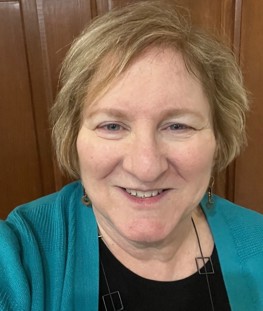
About Dean Sara Shlaer
Sara Shlaer, dean of the School of Arts, Science & Education and a professor of political science, has been with Ivy Tech Community College for 13 years. A native of Brunswick and Golden Isles, Georgia, Shlaer holds a B.A. and M.A. in Political Science from the University of Georgia with concentrations in international relations and political theory. You can learn more about Dean Shlaer in the 2024 edition of the Ivy Indy Magazine and by watching her explain the successful 2025 SASE initiative to clarify course modalities and expectations on IvyInsights.
About Ivy Tech Community College
Ivy Tech Community College is Indiana’s largest public post-secondary institution and the nation’s largest singly accredited statewide community college system. Ivy Tech serves more than 200,000 students annually and offers associate degrees, certificates, and workforce training in more than 70 programs across Indiana. The College is accredited by the Higher Learning Commission and is committed to providing affordable, high-quality education aligned with the needs of Indiana’s workforce.


